
33.1, 44.2, 55.2: these numbers appear on every laminated glass quote, but they are not always well understood. Yet the rule is simple. Here is how to read the code, what each reference weighs and what it is used for.
How to read the code
Laminated glass is made of two sheets of glass bonded by a plastic interlayer, PVB. The first two digits give the thickness of each sheet in millimetres. The digit after the point gives the number of 0.38 mm films. So 44.2 is made of two 4 mm sheets and two films, that is 0.76 mm of PVB, for a total thickness of about 8.76 mm.
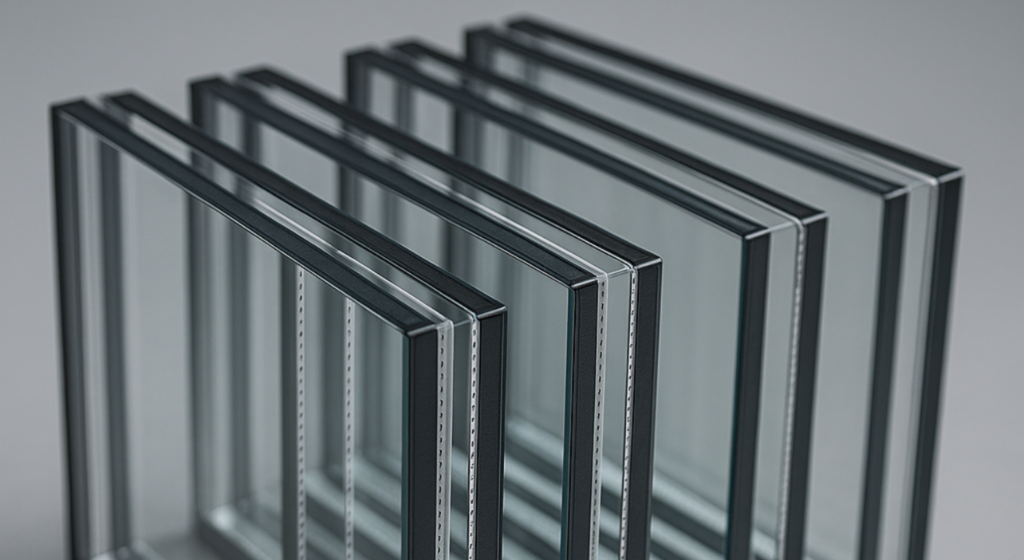
The most common references
- 33.1: 2 × 3 mm and one film, about 6.4 mm and 16 kg per m². Glazed doors, low windows, furniture.
- 44.2: 2 × 4 mm and two films, about 8.8 mm and 21 kg per m². The best-selling reference: balustrades, spandrels, shopfronts, facades.
- 55.2: 2 × 5 mm and two films, about 10.8 mm and 26 kg per m². Large sizes and more exposed areas.
- 66.2: 2 × 6 mm and two films, about 12.8 mm and 31 kg per m². Glass roofs and tall balustrades, subject to calculation.
Why laminated glass protects
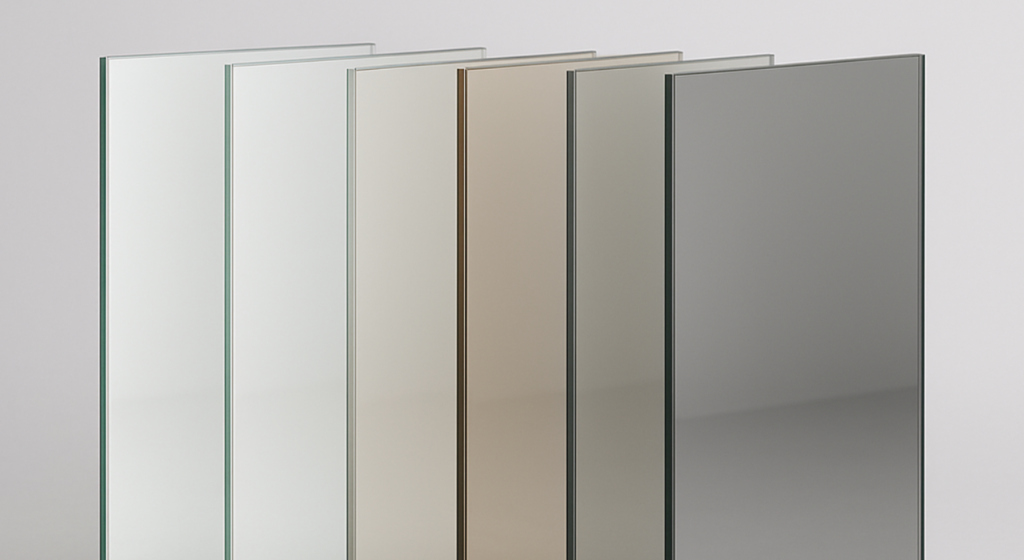
If the glass breaks, the pieces stay stuck to the film: the pane stays in place and nobody gets hurt. The more films, the more resistant the glass is to impact and break-ins. There are also acoustic films to reduce noise, and coloured films.
Standards, sizes and container
- Standard: laminated glass is defined by EN ISO 12543, and its impact resistance is classified by the EN 12600 pendulum test.
- Sizes: 3,210 × 2,250 mm as standard, and 6,000 × 3,210 mm jumbo.
- In a 20 ft container: about 1,100 m² of 44.2 or 900 m² of 55.2, to mix with float.
The thickness for a balustrade, roof or floor depends on local standards and a calculation: always ask the project’s engineer.
Laminated 33.1 to 66.2 by container
Build your container with laminated and float glass, and receive your CIF price within 24 hours.
Build my container Request a price for my port
WhatsApp : +33 6 86 13 12 71 · contact@noxemgroup.com