Interior design is no longer only about furniture or decoration. Today, architects and designers use materials strategically to shape atmosphere, emotion, and visual identity within a space. Among these materials, mirrors have become one of the most powerful tools in contemporary architecture.
Far beyond their practical role, decorative mirrors now contribute to:
- Enhancing natural light
- Visually enlarging interiors
- Creating depth and perspective
- Reinforcing luxury aesthetics
- Transforming the ambiance of a room
From luxury hotels and wellness spas to premium boutiques, contemporary villas, offices, and restaurants, mirrors have become essential elements of modern interior design.
In 2025, interior architecture trends increasingly favor:
- Oversized reflective surfaces
- Bronze and smoked mirrors
- Textured decorative glass
- Minimalist frameless installations
- Artistic mirror compositions
Mirrors are no longer simple accessories — they are now true architectural materials capable of transforming how spaces are experienced.
Why Mirrors Have Become Essential in Contemporary Interiors ?
One of the greatest strengths of mirrors is their ability to completely modify spatial perception.
A strategically placed mirror can :
- Make small interiors appear larger
- Reflect daylight throughout a room
- Create visual continuity
- Soften dark areas
- Reinforce architectural lines
This is particularly valuable in modern urban architecture, where maximizing natural light and visual openness has become a priority.
Example :
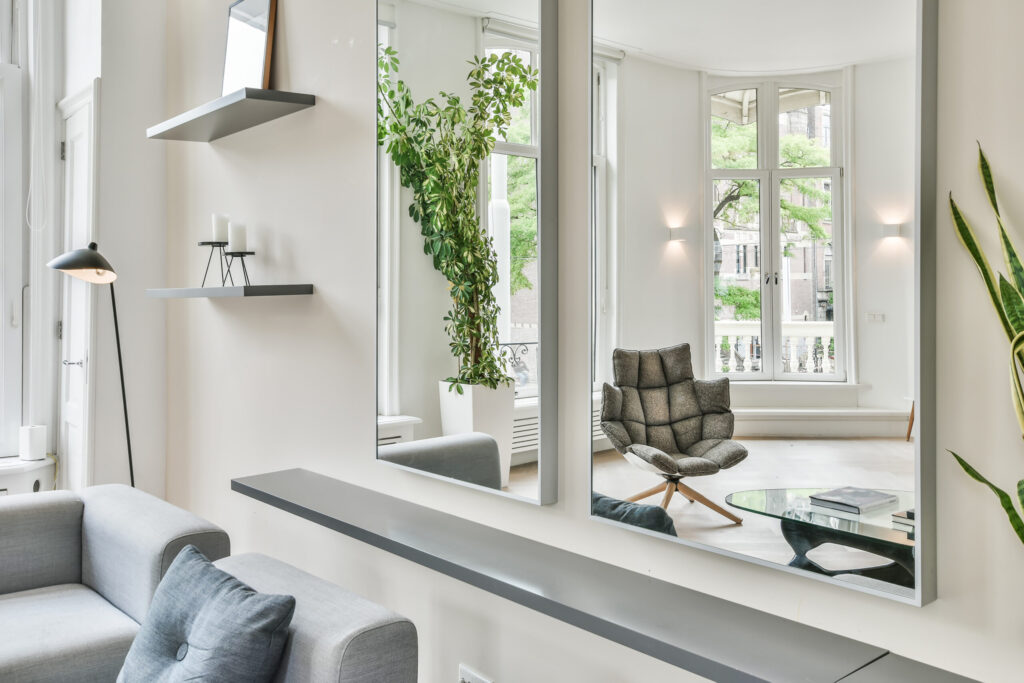
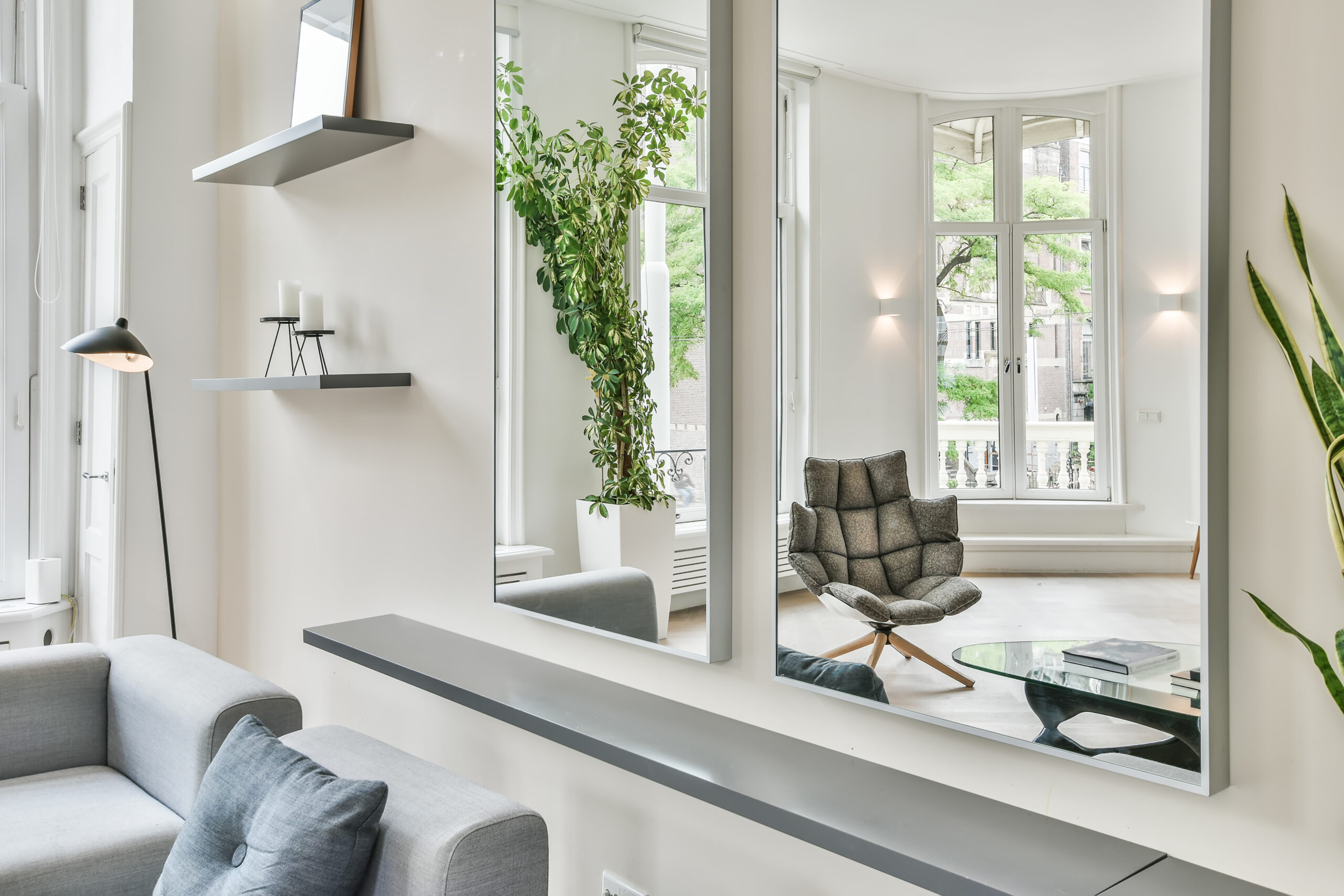
A compact apartment living room can instantly feel brighter and more spacious thanks to a large frameless mirror positioned opposite the windows.
In luxury hospitality design, mirror walls are frequently used in hotel lobbies to create spectacular visual depth and sophisticated reflections.
2025 Interior Design Trends : Mirrors as Architectural Features
Decorative mirrors are now fully integrated into contemporary architectural concepts.
Current trends strongly emphasize :
- Floor-to-ceiling mirrors
- Curved mirror panels
- Smoked and bronze finishes
- Mirror wall compositions
- Integrated LED lighting
- Textured reflective surfaces
Rather than acting as secondary decorative objects, mirrors now define the visual identity of entire interiors.
Example :
Modern restaurants increasingly combine bronze mirrors with dark wood, natural stone, and indirect lighting to create warm and immersive dining experiences.
Similarly, luxury retail stores use oversized smoked mirrors to reinforce elegance while amplifying the perception of space.
Bronze, Smoked and Tinted Mirrors : Sophisticated Reflections
Tinted mirrors have become some of the most requested decorative solutions in high-end interior design.
Popular finishes include :
- Bronze mirrors
- Smoked mirrors
- Grey mirrors
- Black tinted mirrors
These mirrors create :
- Warmer reflections
- Softer atmospheres
- Elegant visual contrasts
- More intimate spaces
Unlike traditional silver mirrors, tinted finishes provide a more subtle and luxurious aesthetic.
Design Tip :
Bronze mirrors work particularly well with :
- Walnut wood
- Marble surfaces
- Brass finishes
- Warm LED lighting
This combination creates refined and timeless interiors often seen in luxury hospitality projects.
Antique Mirrors : Texture, Character and Timeless Elegance
Antique mirrors continue to grow in popularity thanks to their unique visual texture and aged appearance.
They bring :
- Personality
- Vintage sophistication
- Artistic character
- Decorative richness
Antique mirrors are commonly integrated into:
- Boutique hotels
- Luxury restaurants
- Cocktail bars
- Premium residential interiors
Example :
A boutique hotel reception area can use antique mirror panels behind the front desk to create an atmosphere blending historical charm with contemporary elegance.
Their distressed surfaces also help soften reflections and create warmer, less uniform environments.
Mirror Walls and Oversized Panels: Expanding Space Through Design
Large-format mirrors are among the strongest architectural trends of recent years.
Mirror walls are now widely used to :
- Visually double room sizes
- Maximize brightness
- Reinforce minimalist architecture
- Create dramatic visual impact
They are particularly effective in :
- Hotel lobbies
- Fitness studios
- Luxury retail stores
- Modern villas
- Open office spaces
Frameless oversized mirrors remain especially popular because they create clean and seamless architectural lines.
How Mirrors Improve Natural Light and Visual Comfort
One of the most powerful design advantages of mirrors is their ability to diffuse natural light.
Strategically positioned mirrors can :
- Brighten interiors naturally
- Reduce dependence on artificial lighting
- Eliminate dark zones
- Improve visual comfort
Best placements for mirrors :
- Opposite windows
- Behind light sources
- Inside narrow corridors
- Near indirect lighting systems
- In compact rooms
Example :
A contemporary office using mirrored wall panels opposite large glass façades can significantly improve daylight diffusion while creating a more open and productive working environment.
Decorative Glass : The Perfect Complement to Mirrors
Modern interior architecture increasingly combines mirrors with decorative glass solutions.
Popular decorative glass applications include :
- Lacquered glass
- Frosted glass
- Textured glass
- Decorative partitions
- Printed glass panels
- Mirrored wall cladding
These materials allow designers to play with :
- Transparency
- Reflection
- Texture
- Privacy
- Lighting effects
The combination of decorative glass and mirrors creates more dynamic and immersive interiors.
Most Popular Mirror Applications in Modern Design
Luxury Hotels
Used in :
- Reception areas
- Suites
- Elevators
- Spa environments
Goal :
Create elegance, light, and premium visual experiences.
Restaurants and Cocktail Bars
Used for :
- Ambiance creation
- Decorative wall panels
- Reflective ceilings
- Artistic interior compositions
Goal :
Create immersive and intimate atmospheres.
Contemporary Residential Interiors
Used in :
- Living rooms
- Dressing rooms
- Bathrooms
- Hallways
Goal :
Enhance brightness and visually enlarge spaces.
Retail and Luxury Boutiques
Used to :
- Reinforce brand identity
- Improve customer experience
- Create premium environments
Goal :
Combine elegance and visual impact.
Custom Decorative Solutions by Noxem Group
Noxem Group develops decorative mirror and architectural glass solutions adapted to premium interior projects.
The company offers :
- Standard mirrors
- Custom-made mirrors
- Bronze and smoked mirrors
- Antique mirrors
- Copper-free and lead-free mirrors
- Lacquered glass
- Textured glass
- Decorative glass panels
- Mirrored wall cladding
All products are manufactured according to :
- Technical drawings
- Customized dimensions
- Architectural specifications
This level of customization allows architects and designers to create fully personalized decorative concepts.
Premium Finishes for High-End Projects
To answer modern architectural requirements, Noxem Group also provides :
- Polished edges
- Beveled edges
- Drilled cut-outs
- Sandblasted finishes
- Digital printing
- Screen printing
- Safety films
These finishes help transform mirrors into true decorative architectural elements.
Why Architects and Designers Work With Noxem Group ?
Interior designers and glazing professionals increasingly seek partners capable of combining :
- Creativity
- Technical precision
- Flexibility
- Premium quality
Noxem Group supports projects through :
- Bespoke decorative solutions
- Advanced finishing capabilities
- Technical expertise
- Flexible manufacturing
- Project-oriented support
A major advantage for luxury interior architecture projects requiring customized decorative glass solutions.
Bring Your Mirror and Decorative Glass Project to Life
Request a quote on Noxem Group
Every interior project has its own architectural identity and decorative requirements.
Whether you are designing :
- A luxury hotel
- A contemporary restaurant
- A wellness spa
- A premium office
- A residential interior
Noxem Group can help you develop customized decorative mirror and glass solutions adapted to your design vision.
By sharing your project specifications, you can benefit from :
- Personalized recommendations
- Decorative expertise
- Premium finishes
- Custom manufacturing solutions
Conclusion
Decorative mirrors have become essential architectural materials in modern interior design.
Their ability to :
- Transform spatial perception
- Amplify natural light
- Create atmosphere
- Reinforce elegance
- Personalize interiors
makes them indispensable in contemporary architecture.
Combined with decorative glass and premium finishes, mirrors now offer architects and designers unlimited creative possibilities for shaping sophisticated and immersive spaces.
Today, mirrors are no longer simply reflective surfaces — they are true instruments of architectural expression, capable of transforming the way people experience interior environments.
Have a request? Fill out the form below to get in touch:
Form
A flat glass project?
Send us your references and delivery location: you get your price within 24 hours.
Request a price contact@noxemgroup.com · aaron.harfi@noxem-group.com